

No Place Like Home 😂
On Santa Monica, Fire, and Kierkegaard as Showrunner

Thanks for reading gotham girl! This is a free post, so feel free to share it on social media, just be sure to include a link. Sincerest thanks to every single paid subscriber. You are keeping the lights on around here, and I can’t thank you enough for it.

Good morning, Lovelies. How the hell are you?
It’s been a rough 15 days into 2025. For those readers in LA, if you or your loved ones have lost anything in these horrendous fires, I am so inexpressibly sorry. To the first responders, profound gratitude for your bravery and commitment to saving lives in the face of an unrelenting tragedy. We owe you everything.
I am here with my coffee, ruminating over my time in Los Angeles. Every sip is a new realization that I have no sense of where my mouth actually is on my face.
When my ex-husband "fired" me from our marriage without even so much as a PIP (Performance Improvement Plan, for the blissfully uninitiated), I packed up the kids and fled to a tiny house on 21st Place in Santa Monica.
Because what does one do after a catastrophic life implosion? Head west, of course—to the sun, the sand, and a sleepy beach town named after the literal patron saint of women in crappy marriages. Subtle, no?
After years of surviving dark, soul-crushing East Coast winters, I needed California’s warmth and light to thaw me out. What I didn’t expect was for that healing sunshine to incinerate what was left of my life. My kids? Furious. Rightfully so. They rebelled in ways that would’ve impressed even the most seasoned union organizers. Case in point: during my first back-to-work meeting, they immediately locked our new nanny out of the house. Picture it: me, rushing home to find her slumped on the porch, defeated, while their angelic faces mocked her from above in the windowpane.
My eldest, Olivia, took her protests public. She’d lie on the lawn of Franklin School and refuse to go to class. Franklin, by the way, is a charming little hub of neurotic writers and artsy eccentrics—the kind of place where the playwright David Mamet (yes, that David Mamet, long before his Fox News phase) would happen by in his wool cap and red check flannel, “Can I do anything?” He’d ask after offering up staunch (useless) encouragement to my sprawled-out daughter.
“Can you rewrite our lives? Maybe something a little less Spanish Prisoner?”

Looking back, I know now I could have chosen differently. I could’ve stayed on here in Cambridge, where our roots ran deeper and my children would have been closer to family and familiar comforts. A smaller, quirkier, more bookish life here might have made it easier to start over. Instead, I dragged us all to the city of angels as part of some mythical West Coast redemption arc. I thought I could do it all on my own—as long as I had Teodora. And as amazing and hilarious as she is, it was a recipe for total burnout. Oh, Kierkegaard, you merciless showrunner.
By the end, I was so burnt out that seizures had my brain on fire. I might as well have eaten a box of matches.
It made it impossible for me to be anything but a Trauma Plot parent, which is the last thing you ever want for your kids. There’s nothing to be gained by it.
And in truth, there has never been a time when I haven’t known California to be on fire—both metaphorically and literally.
One of my earliest memories growing up there is evacuating with my mother when I was about four, the flames licking the sides of our car as we drove out. I wasn’t scared—I didn’t yet know to be—but I remember feeling worried about leaving my dad and our dog, Braveheart, behind. Braveheart was attempting heroic Lassie maneuvers while my father frantically hosed down the roof. What I remember most about that moment is that neither of my parents betrayed any sense of fear. They were not indulging in the Trauma Plot. There was no spiraling, or if there was—they didn’t show it. There was no time and no great revelatory wisdom to be gained—only that even back then, the planet already seemed at risk.
Over the years, my family has had to evacuate multiple times. Even this last summer, while caring for my dad—we found ourselves making a judgment call at the last minute about how close to let a wildfire come before we hit the road. The hypervigilance required to persist through such an event is beyond exhausting. PG&E is always turning off the power at the slightest wind gust—and that adds a layer of complexity to everything you do.
Even when they’re “contained,” the fires are not over. The air becomes a toxic cocktail of asbestos, lead paint, and carcinogens. Rain turns burn scars into mudslides. It’s a never-ending cycle of destruction, noise, and reconstruction. And don’t even get me started on the bureaucratic hellscape that follows. Insurance companies drag their feet. Rentals disappear. Local governments demand you rebuild faster than contractors can be found, and then fine you for failing to meet impossible deadlines. By the time you're done hemorrhaging money and sanity, getting reinsured is as likely as finding a unicorn in your backyard. We need to create better safety nets for responding to climate catastrophes because there will only be more. Sigh.
The Weekly Doofus: Corporate Stooges
Hands down—the Weekly Doofus award goes to every bloody corporate stooge donating millions to the inauguration and kowtowing to this utterly criminal bozo—who has appointed—what is it now?— 18 Fox News people to his clown car cabinet?
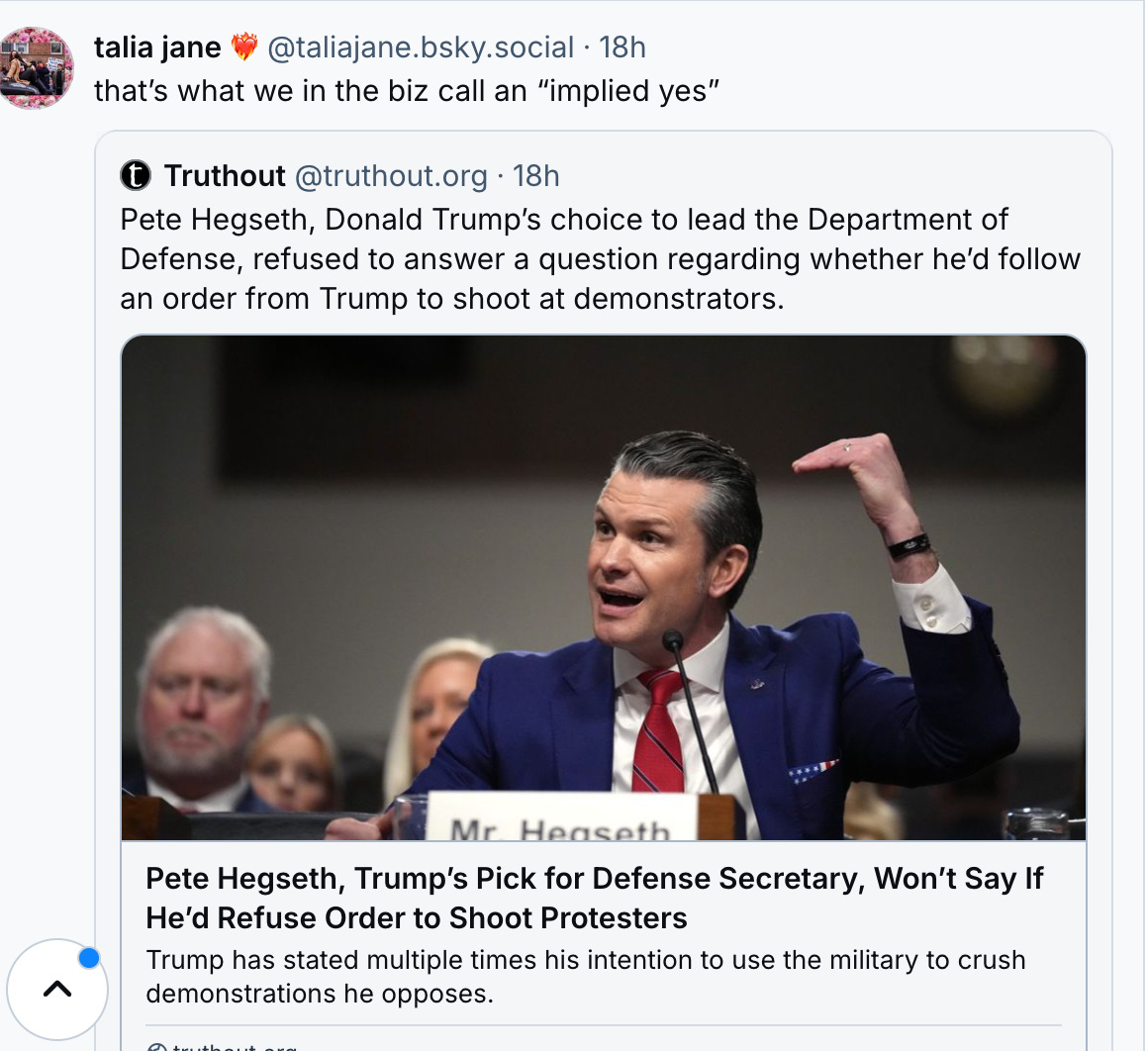
And now the CEO of Coca-Cola is delivering commemorative presidential bottles of Diet Coke? How do they do this with a straight face? Are they warned ahead of time not to stare at how orange he is? Do they have to “orange-up” for photo ops? Why is anyone spending time and money on this when so much else is wrong right now?

The Weekly Doofus (draw): Neil Gaiman
Not to be outdone though… Neil Gaiman, what on earth were you thinking? You had everything. Truly. Tortoise Investigates, which broke the story with a six-part series before the Vulture piece this week, relates a wild narrative of stale, pale, male entitlement. Loads of CWs. Below is not an easy listen but so instructive in reconciling the layers of complexity relative to consent, perception, context, intent, and coercive control. Episode 2 is extraordinary. If you listen to Neil’s voice on the podcast—he doesn’t sound like a horrible, careless, abusive person at all. If it’s an act, it’s a noteworthy and award-winning portrayal of a completely empathetic and caring person. And you hear all sides—even the discussion of his autism. It’s odd and compelling if you can get past the graphic bits. It’s the aggressive NDAs and financial settlements that seem to guillotine him in the end.
And calling him “Master”? Ghaaaagh… No, no. Nope. What even is that photo of him?
Marvelous Misc.
This is just pure delight
Evan Puschak dissects a scene from The Philadelphia Story, featuring Katherine Hepburn and Jimmy Stewart, showing us how the brilliant Hepburn used the character in the film to reframe and soften her own real-life Hollywood narrative.
Here’s a framework for letting it go (whatever “it” is)
This is so solid… All stuff you know, just good reminders, well organized.

Music to work by…
I often work to the soundtrack from The Hours along with a number of different jazz playlists. Recently, I’ve added this to my ambient working music rotation alongside this 10-hour version of Weightless—and am getting WAY more done.
Unattended Children
Don’t you just love bookstores like The Ripped Bodice?

Brain Candy!
A new puzzle… This one is less sadistic, I swear.

MovieGrid
Guess the films that match two sets of criteria. You start with a blank grid of nine squares. Each row and column denotes either an actor, a director, or a type of film – genre, number of words in the title, and so on. The aim is to fill in each square so that it matches both criteria. Click here to play
I do not have a melange of overpriced marvels this week—owing to an editorial deadline, but I wanted to share some mindlessly marvelous distraction before I go…
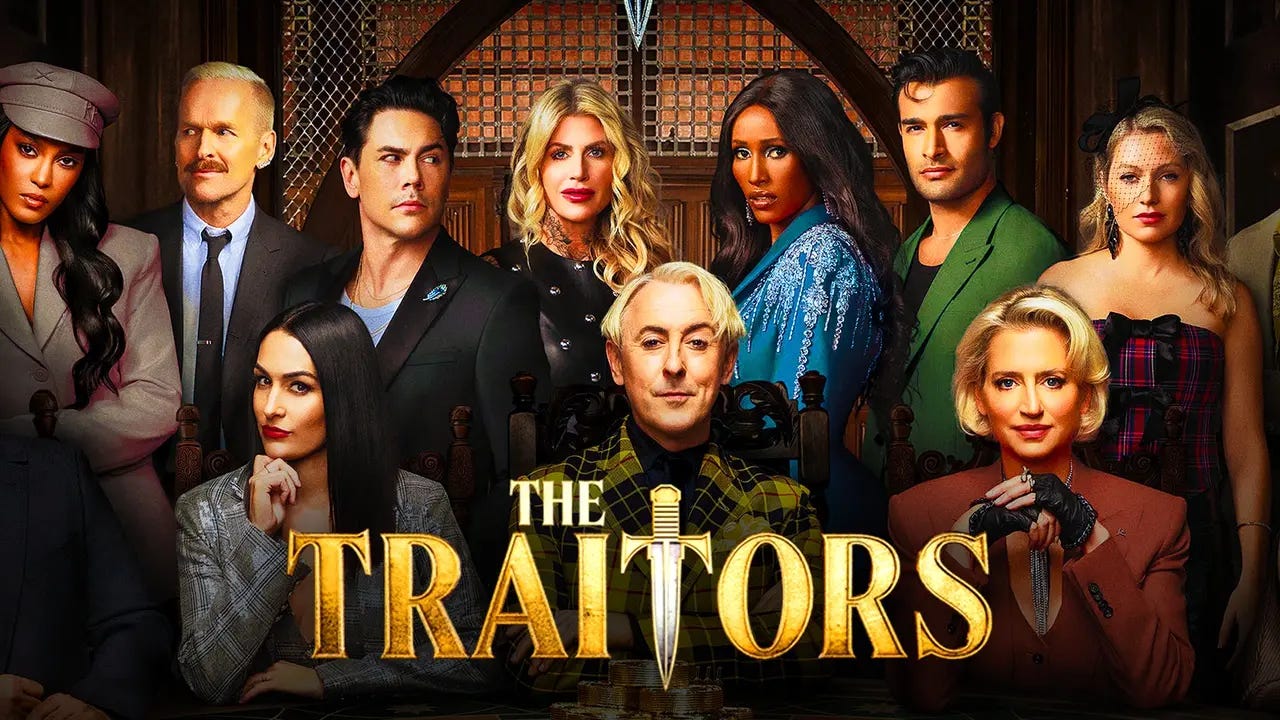
Lord knows I love a good tartan, but what I love even more is great narrative structure. And this season, The Traitors delivers. Often, when I start a project—be it a silly Hallmark movie or a thriller I’m ghosting, I start at the end. The Traitors works the same way.
The climax unfolds at the round table, where contestants confront each other, leveling accusations and attempting to unmask the "rats." Though this dramatic scene concludes each episode, the editors actually start there, crafting it first. Once this bit is finalized they reverse-engineer the rest of the episode, shaping the day’s footage to lead inexorably to that climax. This backward approach ensures the narrative feels earned, pulling viewers along toward a predetermined end.
Despite not overtly manipulating the contestants’ actions during the day, the editors craft strong story arcs for each participant. By the time Alan leaves the room during the roundtable, allowing for a Twelve Angry Men-style showdown, it all feels natural—even though it’s been meticulously constructed. This deliberate process is why each episode feels narratively tight: it’s all been set up to pay off.
This technique mirrors how I often work. First, I write the ending—holding the shape of the whole story loosely in my head having fermented on it for a while—usually six months to a year—with research. Then, in my second pass, I shape the beginning and middle to make that ending feel earned—it’s not necessarily an inevitable ending, but it’s one that’s satisfying, with no loose threads.
In The Traitors, if a contestant’s actions don’t build toward a compelling round table payoff, their storyline may not make the final cut. Conversely, if they shine at the climax, you can bet the day’s edit has been crafted to highlight their journey, ensuring their narrative arc stands out.
Joel Morris writes about this very same thing in the British version of the show. I’m paraphrasing him here, so bear with me:
This method transforms reality TV into an Agatha Christie-level mystery, where viewers feel they’re privy to all the action—yet remain cleverly fooled. It’s a masterclass in storytelling: start with the dénouement, plant the clues, and disguise the mechanics. The result is deeply satisfying and it’s almost as if Kierkegaard were the showrunner after the philosopher’s observation: “Life can only be understood backwards, but it must be lived forwards.”
Ironically, Agatha Christie—the Queen of Whodunnits—worked oppositely. With her whodunnits—she never knew who did it. She was a total “pantser,” writing by instinct rather than meticulous planning. She reveled in her characters’ quirks and flaws, letting the story organically emerge and only deciding who could have done it, on the fly, at the very, very end.
Why do we love shows like The Traitors so much? Because life is messy and chaotic, and we are all secretly desperate for a showrunner. Someone practiced at spotting patterns, understanding motives, and predicting outcomes. In the controlled world of storytelling, the showrunner finds a comforting order that real life so often lacks. Through their work, we learn to see who was always destined to fail, who was lying all along, and who was meant to win. Alors… if you need some order amid all the chaos of the coming week, now you know where to look.
That’s what I got. Yours in papercuts - xoxo - gotham girl
PS - I am a human typo. Amnesty appreciated.
And now a word from our sponsor…

Your legacy is too important to leave to chance.
Trust & Will makes estate planning simple, fast, and affordable. In just a few easy steps, create a legally valid, state-specific will, trust, or healthcare directive from the comfort of your home. Start now for just $199 and gain peace of mind knowing your legacy is protected.
"Even when they’re “contained,” the fires are not over." Indeed.
A rough and heartbreaking start to what promises to be a tumultuous year.
And what a tumultuous life, Alisa!
»Can you rewrite our lives? Maybe something a little less Spanish Prisoner?« 😎
Your sense of fiery black humour is priceless! ❤️🔥
Wow, so well written Alisa. The fires inside mirroring the fires outside. California is a promise land for many but the burnout is also very real. I had no idea that’s where you were when your own brain’s matchbox lit up too. Feels symbolic, important, that you’ve exited there finally and maybe your body even feels it too—a settling that it maybe hasn’t really had since the “marriage firing” that set everything else aflame.